
Portfolio / Product Strategy • UX Research • Full-Stack Development • SEO & Performance

Voltaicos

Multilingual solar lead-generation platform focused on UX, SEO, and performance—turning a basic website into a scalable acquisition engine for the Algarve.
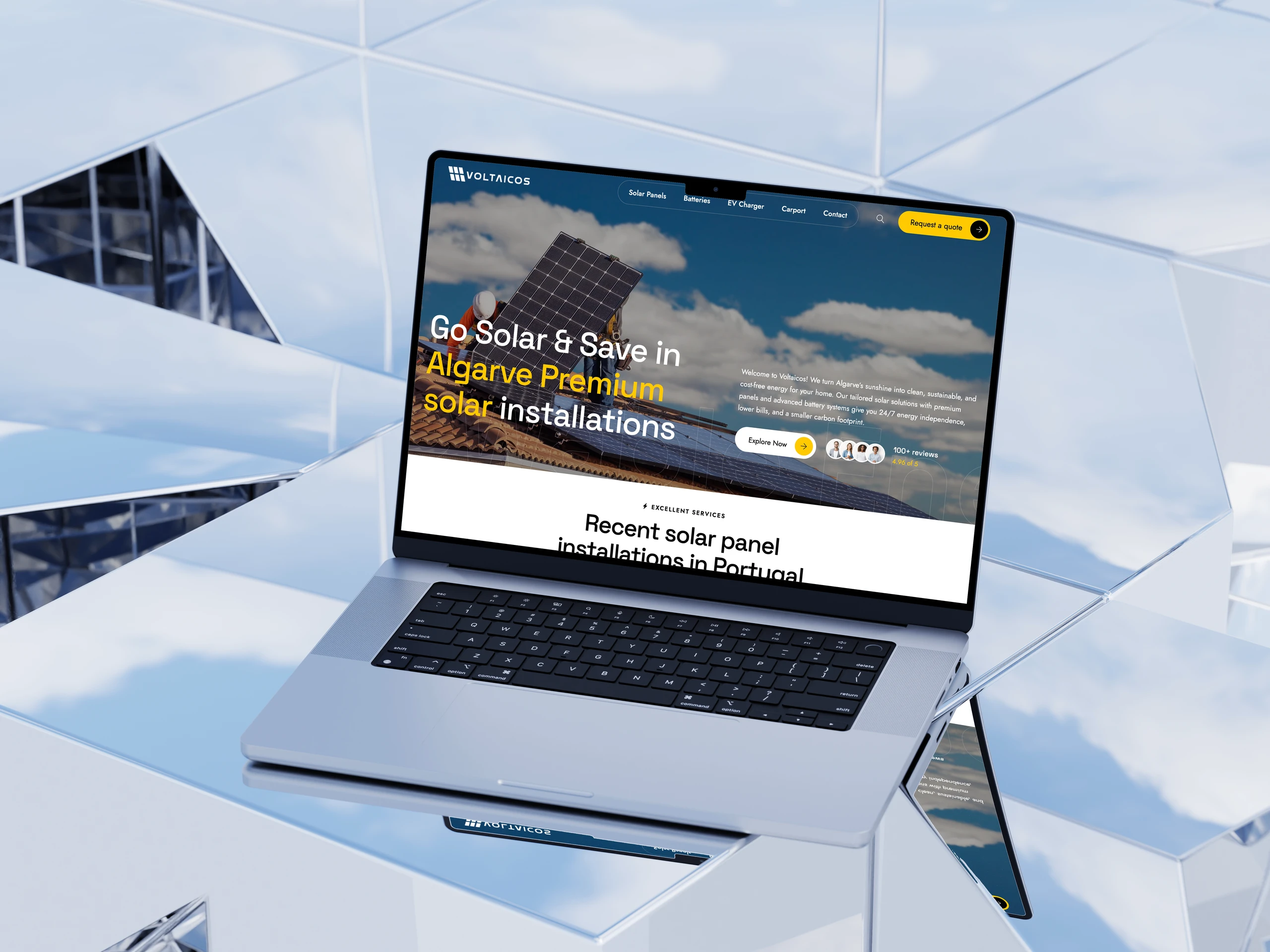
Voltaicos - Product Strategy • UX Research • Full-Stack Development • SEO & Performance | Criazo Case Study

Category

Product Strategy • UX Research • Full-Stack Development • SEO & Performance

Year

2026

Duration

6 months

7

Languages

Laravel UX Research Multilingual SEO Lead Generation Custom CMS Performance

Project Overview

Challenge

The client needed to move from a single-language site with low-quality leads, confused users, and poor mobile performance. Sales spent too much time qualifying prospects; navigation didn't match user intent; forms were long and generic; and trust signals were minimal. The business wanted to expand into multiple European markets and own the full journey from first visit to qualified quote request.

Solution

We reimagined the product from the ground up: stakeholder and heuristic research informed a new information architecture and persona set (cost-driven homeowners, international property owners, time-pressed business owners). We designed a 7-step quote wizard, true localized routing with translated URLs and hreflang, a savings calculator, and a custom Laravel CMS for pages, blog, projects, reviews, and funnel analytics—so the team could scale content without developer dependency.

Results

Voltaicos evolved from a basic website into a multilingual acquisition platform, an SEO growth engine, and a conversion-optimised UX system. The step-based flow increased both completion and lead quality; localized URLs drove international SEO; and performance and accessibility targets (mobile ~75–80, a11y 95+) directly support trust and conversions. The CMS enables rapid content creation and continuous optimisation based on drop-off and conversion data.

Project Details

Discovery and UX research

Stakeholder interviews with the sales team surfaced recurring pain: low-quality leads, users confused about solar system types, unrealistic pricing expectations, and time lost qualifying prospects. A heuristic audit of the old site revealed navigation not structured around user intent, long generic forms that discouraged completion, single-language limitation, and minimal trust signals. Market and competitor analysis showed that high-performing solar platforms consistently used savings calculators, step-based quote flows, localized content per market, and strong social proof—projects and reviews. We turned these insights into three clear personas: Carlos (cost-driven homeowner), Sophie (international property owner), and Miguel (small business owner), each with distinct goals, pain points, and needs. This research became the backbone of the information architecture and conversion strategy.
  • Stakeholder interviews and heuristic UX audit
  • Personas: cost-driven homeowner, international owner, small business
  • Competitor and market analysis driving IA and conversion design
Discovery and UX research
Project gallery image
Information architecture and conversion tools

Information architecture and conversion tools

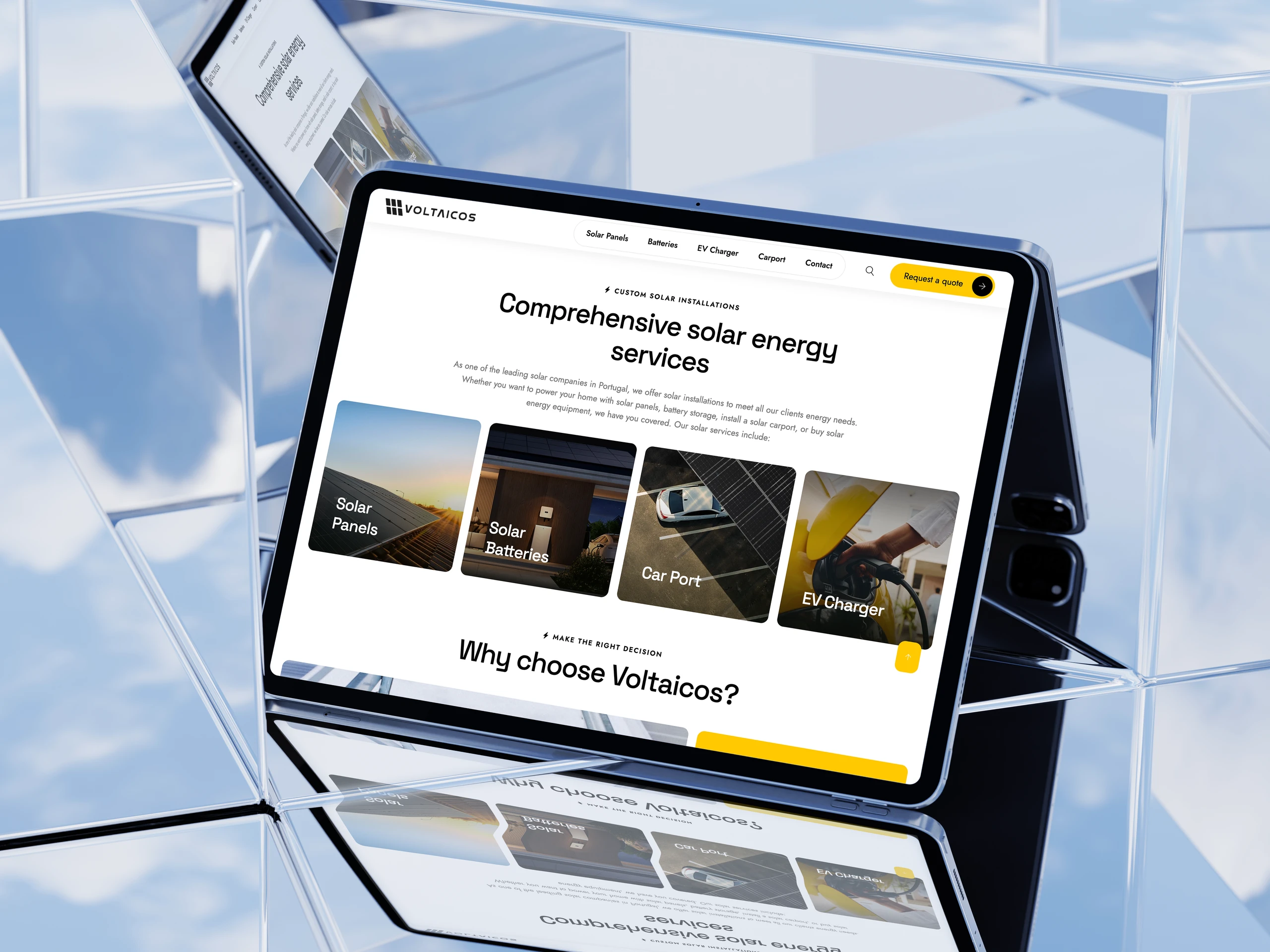
The site was rebuilt around search intent and decision journeys. Product sections—solar panels, batteries, EV chargers, carports, off-grid systems—sit alongside trust and education: projects, customer reviews, solar guide, and blog. Conversion tools are central: a multi-step quote flow, savings calculator, and consultation booking. This structure supports SEO topic clusters while guiding users toward a single, clear next step. Every section answers the question: "What does this user need to know or do before they request a quote?"
  • Product, trust, and conversion pillars in the IA
  • Topic clusters aligned with search intent and conversion
  • Quote wizard, calculator, and booking as primary conversion levers

Multi-step quote wizard and funnel tracking

A 7-step guided flow replaced the old generic form. Each step asks one focused question: property type, energy usage, roof conditions, product interest, timeline, contact details, and availability. We applied clear UX principles: visible progress indicator, mobile-first layout, plain language, and low cognitive load. Funnel tracking is built into the experience: every submission records last step reached, completion percentage, language, source channel, and timestamps. The sales and marketing team can analyse drop-off by step and device, and optimise copy or flow continuously. Step-based forms didn't just increase completion—they improved lead quality by pre-qualifying intent and context.
  • One focused question per step with progress and mobile-first design
  • Full funnel tracking: step, completion %, language, source, timestamps
  • Drop-off analysis and optimisation roadmap
Multi-step quote wizard and funnel tracking
Multilingual UX and i18n architecture

Multilingual UX and i18n architecture

The platform supports seven languages: English (default), Portuguese, Spanish, French, German, Dutch, and Italian. We chose true localization over simple text translation. Full language routing, translated URLs (e.g. /nl/zonnepanelen, /pt/painel-solar, /fr/panneaux-solaires), localized SEO indexing, and canonical and hreflang automation let each market rank independently without duplication. The Laravel implementation includes locale middleware, slug mapping per route, translation helpers, file-based translations, and admin-editable content—with the architecture ready for future database-driven i18n. Localized URLs and structured content were key to international SEO growth.
  • Seven languages with full language routing and translated URLs
  • Canonical and hreflang automation for independent market indexing
  • Laravel locale middleware and slug mapping; ready for DB-driven i18n

SEO system and performance

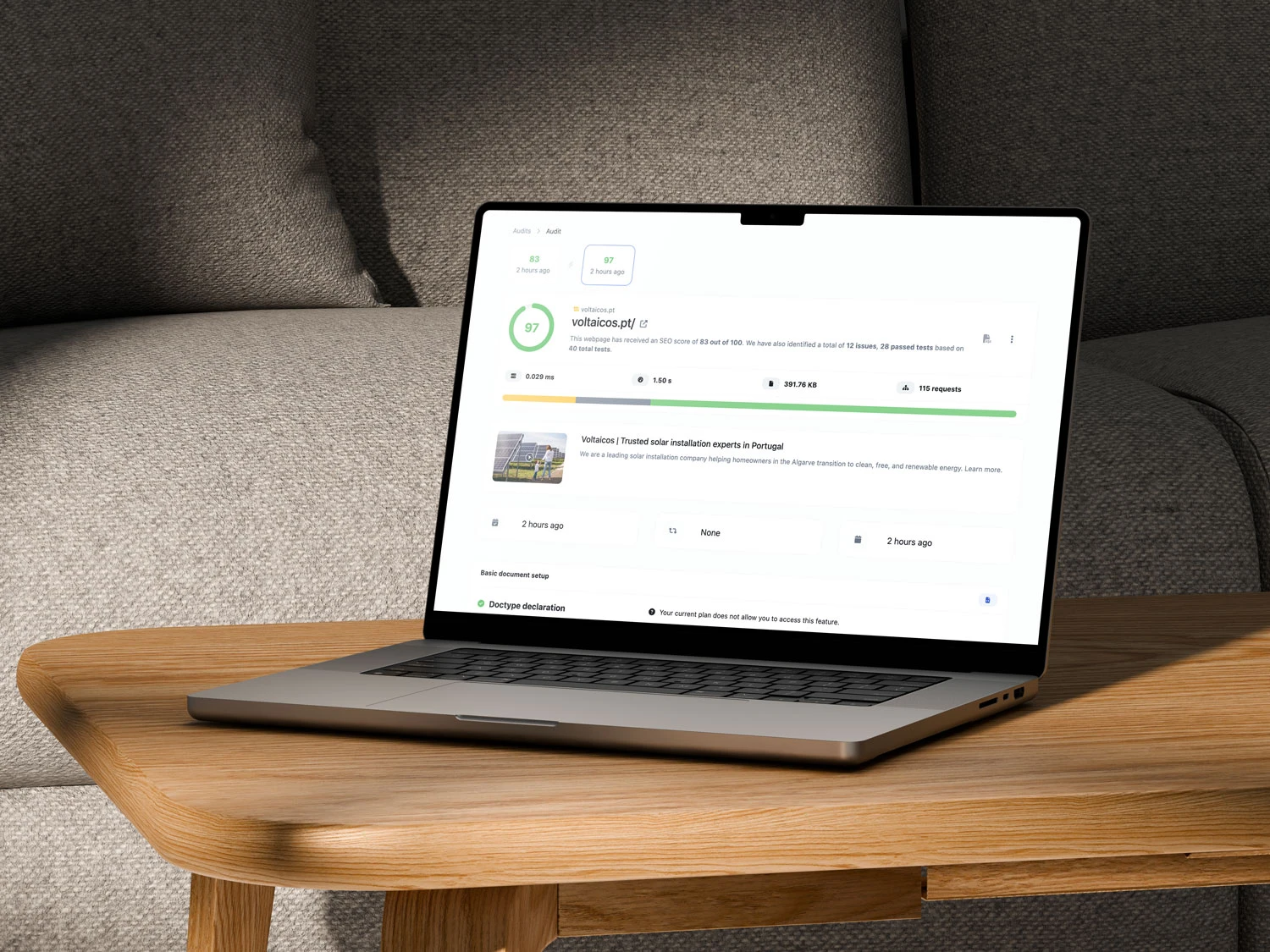
On-page SEO is driven by semantic structure, search-intent content, and internal linking clusters. Technical SEO includes canonical logic per locale, hreflang automation, locale-specific XML sitemaps, and structured data: Organization, LocalBusiness, FAQ, and Breadcrumb. Performance and accessibility were non-negotiable: preconnect hints, server-side caching, GZIP, responsive image sizing, semantic HTML, and ARIA labels. Target metrics are mobile performance around 75–80 and accessibility above 95. We documented a continuous UX and performance iteration roadmap so the team can keep improving quote completion, drop-off by step, conversion by device, and SEO growth per language.
  • Structured data and locale-specific sitemaps for international SEO
  • Performance: caching, compression, responsive images, semantic HTML
  • Accessibility targets 95+ with ARIA and semantic markup
SEO system and performance
Custom CMS for scalable growth

Custom CMS for scalable growth

A custom CMS built in Laravel gives the team full control: pages and landing builders, blog and projects management, customer reviews, translation management, lead submissions dashboard, funnel analytics, and user roles and permissions. Marketing can create and update content, publish in multiple languages, and analyse funnel and conversion data without depending on developers. This autonomy was a core business objective—turning the site into a scalable content product that can grow with the company's European expansion.
  • Pages, blog, projects, reviews, and translation management in one CMS
  • Lead submissions and funnel analytics built into the admin
  • Roles and permissions for safe, scalable content operations

Outcome

Voltaicos evolved from a basic website into a multilingual acquisition platform, an SEO growth engine, and a conversion-optimised UX system. These pillars define what we delivered.
7 Languages
7-Step Quote Flow
75–80 Mobile Perf.
95+ Accessibility

Technologies & Tools

Laravel 12 Stateless Form API SEO Automation i18n Middleware Custom CMS Structured Data

Project Results

7
Languages
7-Step
Quote Wizard
75–80
Mobile Performance
95+
Accessibility

Project Gallery